



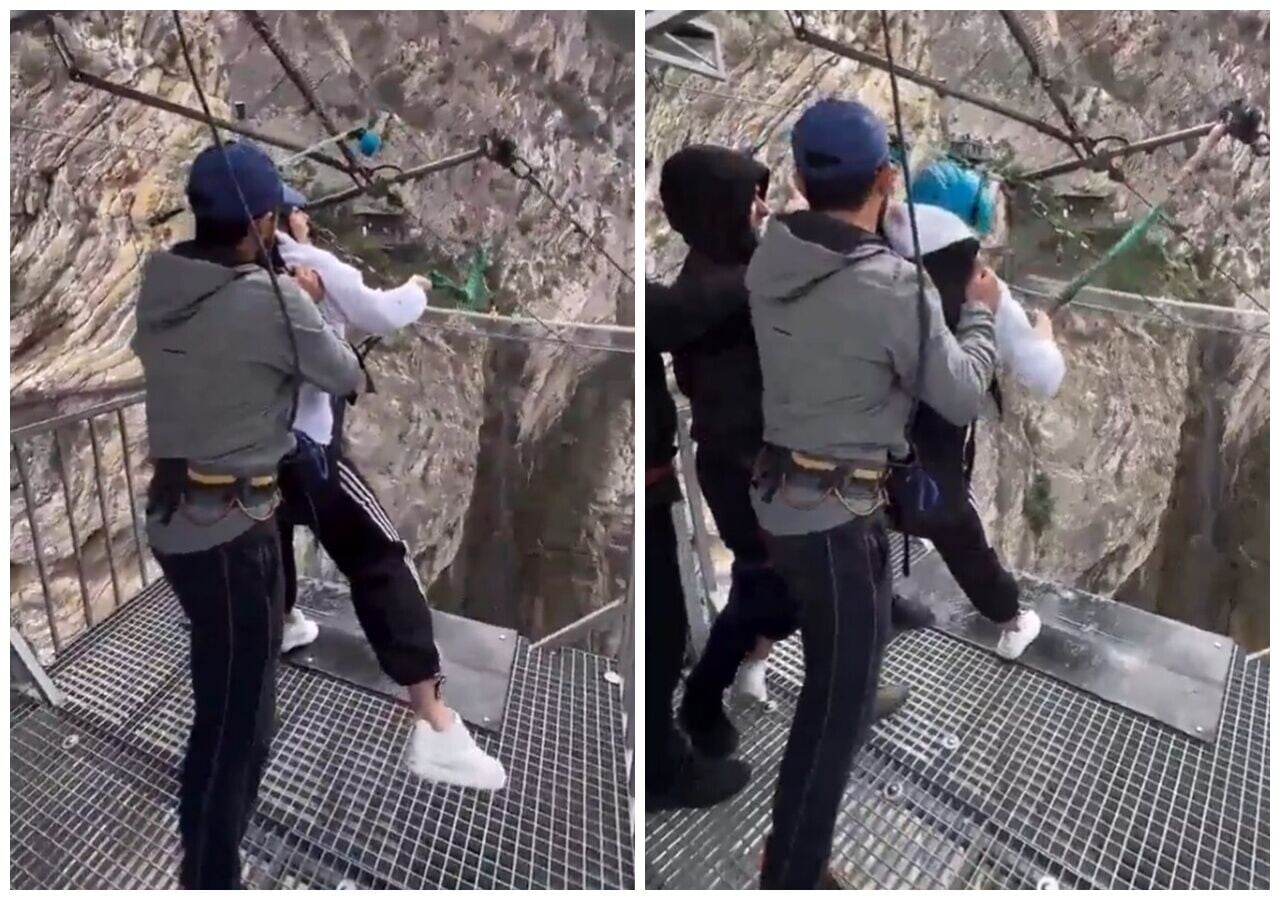
女遊客笨豬跳反悔喊叫遭強推,丈夫無視拍片還笑,網民怒勸離婚。(X)

俄羅斯達吉斯坦(Dagestan)一名女遊客早前體驗峽谷笨豬跳,惟因害怕而反悔,詎料工作人員仍強行將她推向跳台邊緣,甚至從後方踢她腿,強迫女子坐上平台邊緣,讓她從79米高處墮下。與此同時,女子的丈夫一直旁觀,甚至對神情充滿恐懼的妻子,仍發出笑聲。
綜合報道,事件發生於達吉斯坦蘇拉克河(Sulak River)沿岸的Noh'o觀光景點,影片於9月29日前後開始在網上瘋傳。影片顯示,女子身上繫著安全吊帶,但明顯對將進行的峽谷笨豬跳感到畏懼,職員卻抓住她的腰部向前推;女子拉著對方請求不要把她丟下去,喊著「拜託不要那樣把我丟下去!不要!」她又反覆哭喊「不!放開我,放開我!」並向丈夫求助:「拜託不要!我求你了!」然而,職員人數由1個人增加至3個人,從後推女子帶到跳台邊沿,甚至從後方踢她腿,迫使她坐上跳台邊緣,再迅速啟動機器,讓她從79米高處墮下。
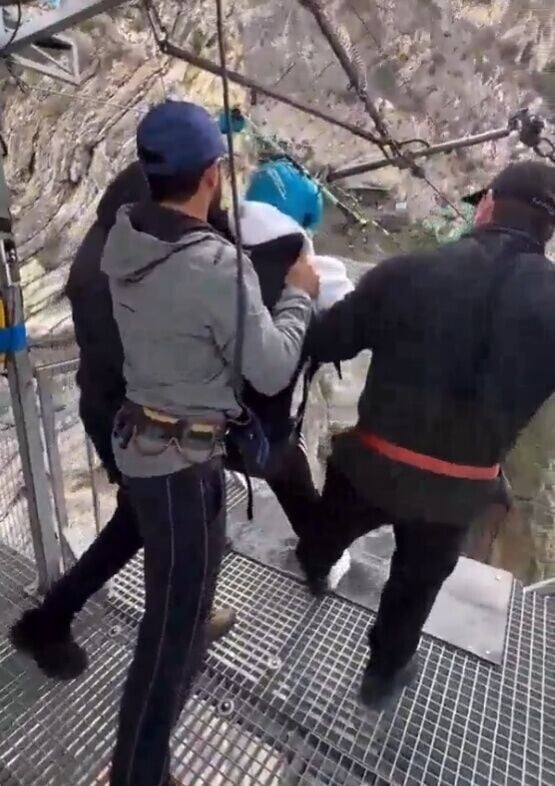
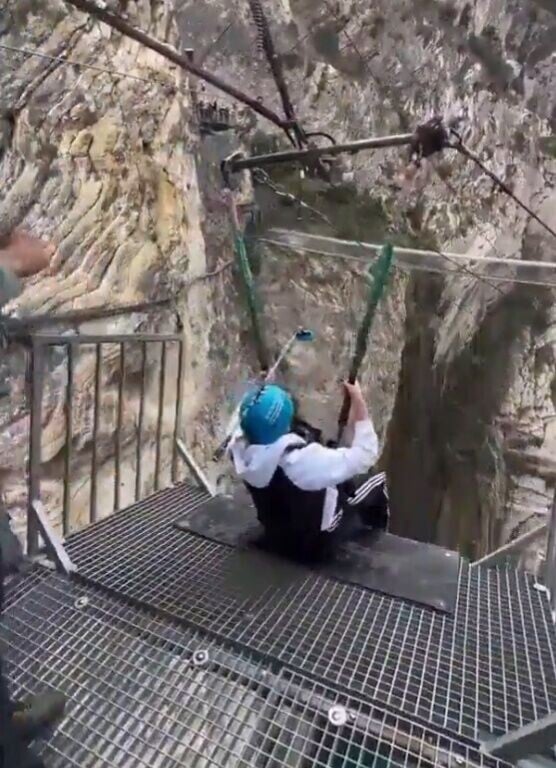
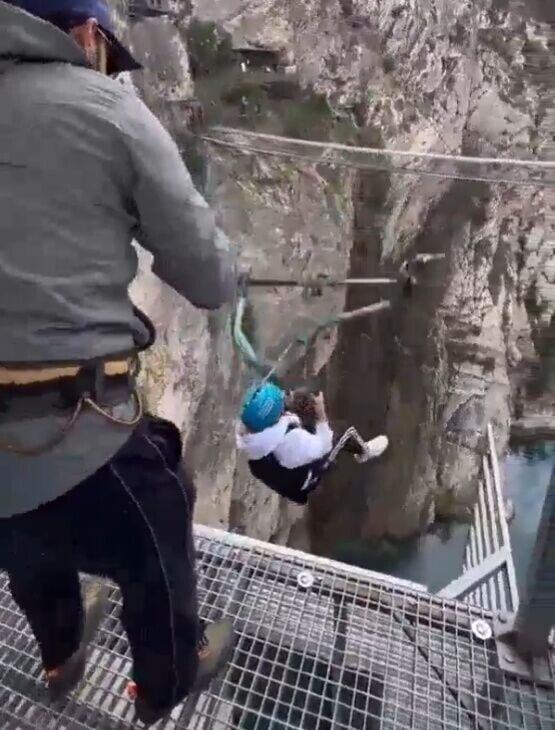
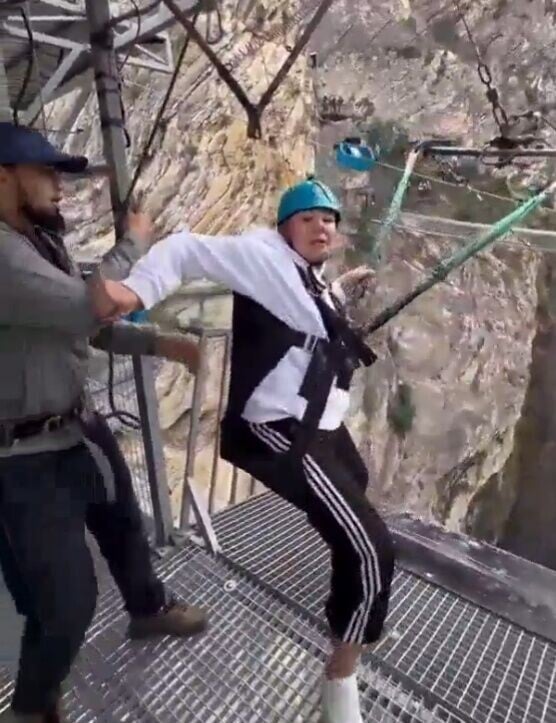
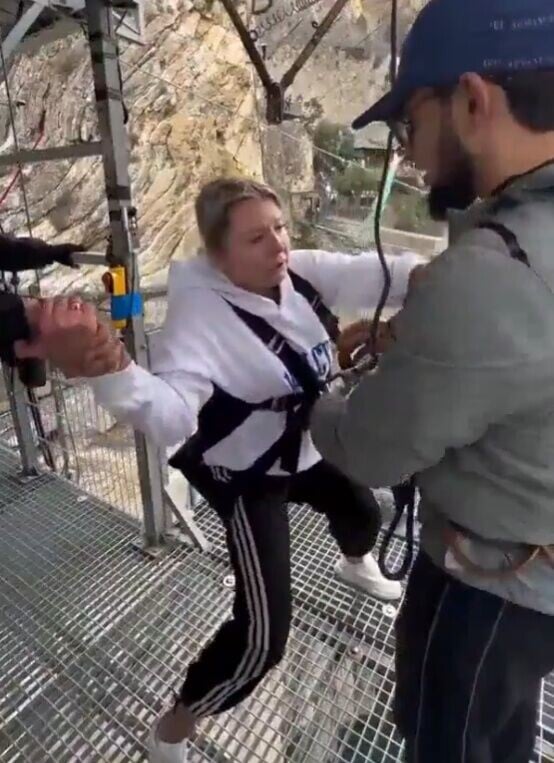
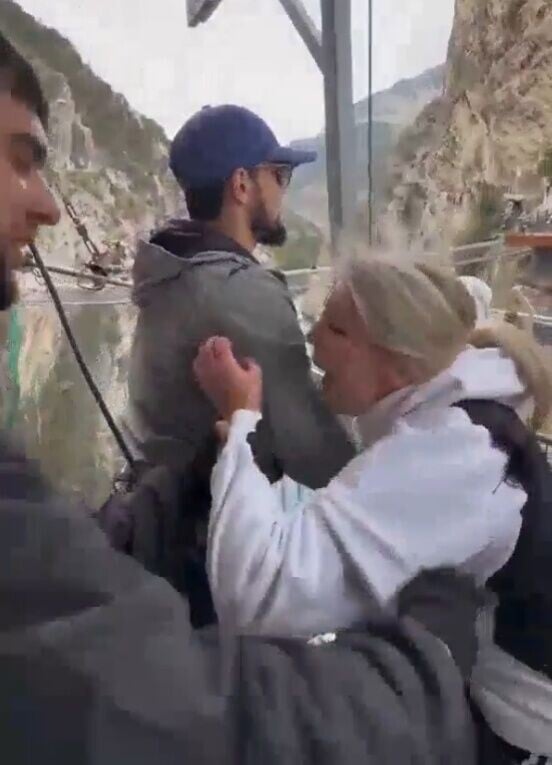
營運機構一度聲稱影片是擺拍宣傳
女子驚恐體驗後被拉回平台,工作人員竟然還戲弄她,問她是否要「再跳一次」,讓她情緒更崩潰。她當場拒絕,死命抓著攔杆。至於她那正在拍片的丈夫,由始至終沒有回應妻子的求助,反而其笑聲傳入影片。俄羅斯聯邦調查委員會已介入調查,釐清現場工作人員是否有違規或應負其他責任,包括其他強迫、虐待遊客的違規行為。該活動營運機構的代表一度在網路上辯稱這段影片是為了社交媒體宣傳而「安排好的橋段」,並稱遊客並未受傷且沒有投訴。然而,有現場職員後來承認錯誤,並向受害者支付賠償金。影片流傳後,不少網民注意到女子眼中充滿著恐懼,對於職員、尤其事主丈夫無視妻子的無助,感到厭惡和憤怒,紛紛怒吼說:「離婚吧!」。
**** Avoid This Location**** A tourist was forcibly launched off a zipline over Sulak Canyon in Dagestan after she withdrew consent. At the last moment she froze, begged to be unclipped, and tried to pull back. Instructors overpowered her, struck her legs, and shoved her off the platform. They then laughed at her terror.This is the second reported case at the same site. Earlier, another woman was pushed off without consent and without time to brace. She was later diagnosed with a spinal cord contusion and began suffering episodes of paralysis. About 📍: Dagestan is a republic of the Russian Federation in the eastern North Caucasus, on the western shore of the Caspian Sea. It is Russia’s southernmost region: Azerbaijan and Georgia to the south and southwest, Chechnya and Stavropol Krai to the west, Kalmykia to the north. Area is about 50,300 km². Capital: Makhachkala. Population is around 3.26 million (2025). The name means “land of mountains.” The north is steppe and lowland; the south is the Greater Caucasus, with peaks over 4,000 m. The Caspian coast is a narrow plain. Sulak Canyon sits in central Dagestan, mainly Kazbekovsky and Buynaksk districts, about 80–100 km from Makhachkala, near the settlement of Dubki. The Sulak River cut a gorge about 53 km long and up to 1,920 m deep—often called Europe’s deepest canyon. The zipline/canyon-swing sites sit on that rim. Ethnicity. Dagestan is Russia’s most multiethnic republic: more than 30 peoples, 14 official state languages besides Russian. Approximate shares from the latest census data: Avars — ~30.5% Dargins — ~16.6% Kumyks (Turkic) — ~15.8% Lezgins — ~13.3% Laks — ~5.2% Tabasarans — ~4.0% Azerbaijanis — ~3.7% Russians — ~3.3% Chechens — ~3.2% plus Nogais, Aguls, Rutuls, Tsakhurs, and smaller groups Avars, Dargins, Laks, Lezgins and related groups are Northeast Caucasian peoples. Kumyks and Nogais are Turkic. Russian is the language of administration and interethnic communication; many people also speak their own language. Religion. The republic is overwhelmingly Muslim—typically cited around 90–96%. Most are Sunni, Shafi‘i school. Nogais and some Kumyks are Hanafi. A Shia minority (mainly Azerbaijanis around Derbent, plus one Lezgin village) is a few percent. Traditional Islam here has long been tied to Sufi orders (Naqshbandi, Qadiri, Shadhili). There is also a smaller Salafi current. Christians (mostly Russian Orthodox) and Mountain Jews are small historic minorities. Other notes. Society is socially conservative and clan- and village-oriented. Tourism has grown around mountains, Derbent’s old city, and Sulak Canyon, but safety and regulation of attractions have been uneven—exactly the context of the forced-launch cases. Many governments still advise caution or against travel to parts of the North Caucasus.
— R J (@rahuljaitley) September 30, 2026